Banquet Hall Requirements: The Checklist to Work Through Before You Sign
Licences, sound curfew, generator load, vendor policy, access hours and contract terms. The questions that decide whether a Bangalore banquet booking goes smoothly, and which most couples only discover afterwards.
Venue visits are designed to make you feel something. Contracts are designed to allocate risk. The gap between those two experiences is where most banquet hall regret lives.
This is the list to work through before you sign, grouped by how badly each item hurts if you get it wrong. None of it is exotic. All of it is routinely skipped.
1. Licences and compliance
The unglamorous section, and the one that can end an event.
Ask for the trade licence, current and in the name of the entity you are contracting with. The fire NOC, issued, current, and covering the spaces you will actually use. The occupancy certificate for the building. FSSAI registration if the venue is providing food. The liquor licence, held by the venue, or a clear written process for a temporary permit, and establish who is legally responsible for service. And pollution control board consent for the sewage treatment plant if the venue has one.
Ask to see them rather than asking whether they exist. A venue that operates properly produces these without friction, and hesitation is itself an answer.
2. The sound curfew
This is the single most commonly missed item at Bangalore weddings.
Noise pollution rules restrict amplified sound in the open between 10pm and 6am. It is enforced, it is not negotiable by the venue, and it applies to your sangeet, your DJ and your live band regardless of what anyone promised verbally.
Settle in writing what time outdoor amplified sound has to stop, whether there is an enclosed indoor space where music can continue past the curfew, what the venue's own policy is since it may be stricter than the legal limit, and whether there are residential neighbours who have complained before.
3. Power and utilities
Ask for the generator rating rather than reassurance, and establish whether backup covers the full load including air conditioning and the kitchen, or only lights and fans. Check the changeover time on power failure and whether it is automatic. Confirm the load available for your vendors, since DJ rigs, LED walls and decorative lighting draw heavily and your decorator's requirement needs to match what the venue can supply. Then check water supply for the guest count including the kitchen, and sewage treatment sized for peak occupancy.
4. Capacity, honestly stated
Ask for seated dinner capacity, which is not the same as float capacity. The difference is substantial — here is the per-guest area math for a 1,000-guest banquet hall. Find out whether the hall is column-free, because columns cost usable area and break sightlines. Get the washroom fixture count per gender, where roughly one per 100 guests is the working minimum. And confirm parking spaces plus valet staffing for your peak arrival rate, and the number of entry points.
5. Catering and vendor policy
Establish whether it is in-house catering only or outside caterers are permitted, and what charge applies if they are. Ask whether you are restricted to an empanelled vendor list for decor, DJ and photography, and what fee or deposit applies if you bring someone external.
Then the practical details. When the tasting happens, how many people it covers and whether it is included. The menu finalisation deadline and how much can change afterwards. Dietary requirements, including pure vegetarian kitchens, Jain food and allergies. And the service ratio, in servers per guest for plated and stations per guest for buffet.
6. Access and timings
Find out when setup access begins, since decor for a large wedding often needs the previous day. Get the teardown deadline and any charge for running past it. Establish the event end time, which is distinct from the sound curfew, and the overtime terms in writing if the event runs long. If you have multiple functions, confirm multi-day access for mehendi, haldi and sangeet, and whether decor can stay up between them.
7. Rooms and guest accommodation
How many rooms, and are they held for you or booked separately? Check check-in and check-out timings against your functions, because a noon checkout after a late reception is a problem. Confirm rooms for getting ready on the morning of, and when they become available. And ask where outstation guests overflow to if the on-site rooms run out.
8. The contract
Go through the payment schedule and what each instalment secures. Cancellation terms, meaning refund percentages against notice periods. Postponement terms, separately from cancellation, because these are different clauses and the second one matters more than people expect. Force majeure, what it covers and what happens to money already paid.
Then check what is included versus what appears later: generator, service charge, taxes, overtime, vendor fees. Whether the venue carries public liability insurance. The damage deposit and the conditions for its return. And a named point of contact for the day, with a phone number, written into the contract.
9. Weather contingency
For any outdoor element, establish what the covered fallback space is and whether it holds your full guest count. Find out how late the call can be made to move indoors. Check whether moving indoors changes the catering plan or the decor cost. And ask whether there is covered walkway access between spaces or guests have to cross open ground.
Bengaluru's monsoon is not hypothetical. A venue that answers "we will figure it out" is telling you the plan does not exist.
10. What to walk away from
Licences that cannot be produced. Verbal assurances on the sound curfew that contradict the law. Refusal to state seated capacity separately from float capacity. No written postponement clause. Generator backup that excludes air conditioning or the kitchen. And a parking count that does not survive the arithmetic of your guest list.
How Le Roma Gardenia is set up
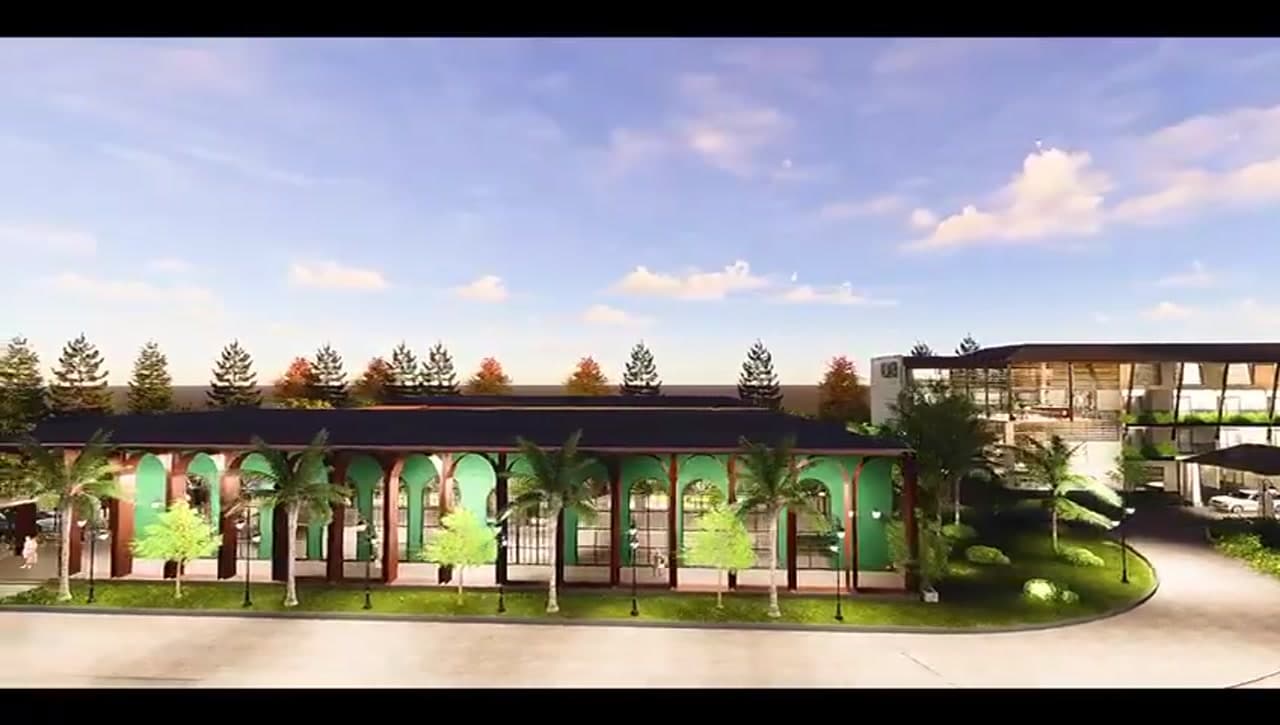
Le Roma Gardenia is built at Hesaraghatta in North Bengaluru. There is a 9,000 sq ft column-free AC banquet hall, a 30,000 sq ft grand outdoor lawn and a 15,000 sq ft garden lawn, so an outdoor function has a genuine indoor fallback rather than a theoretical one. Parking holds 300 cars on site. There are 81 rooms for guests staying over, in-house catering from a commissioned kitchen, generator backup, in-house event planning and a named coordinator per event.
Work the checklist above against any venue you are considering, this one included. A venue that is set up properly will welcome the questions.
Bring us your checklist
Share your dates, guest count and format, and ask whatever you need to about licences, curfew, power or contract terms. We would rather answer all of it now than have you discover something on the day.
Related reads: