Wedding Venues for 1,000 Guests in Bangalore
What a 1,000-guest wedding needs from a Bangalore venue: floating vs seated capacity, parking for 300+ cars, catering throughput, and an eight-point checklist to work through before you sign.
When Your Guest List Crosses Four Figures
Indian weddings are grand affairs by tradition. Extended families, business associates, community connections, and friends from every chapter of life — it all adds up. When your guest list crosses the 1,000 mark, your venue requirements change fundamentally. What works for 300 guests will not work for 1,200. The margins for error shrink, and the stakes — both financial and emotional — rise considerably.
This guide provides a practical, detailed checklist for evaluating wedding venues when you're planning at scale.
The Venue Size Equation
Indoor Space
The number you need depends entirely on whether guests are sitting down, and this is where most venue shortlists go wrong.
For a ceremony or a standing reception with 1,000+ guests, budget a minimum of 8,000–10,000 sq ft of indoor, air-conditioned space. That covers the stage or mandap, a dance floor, service corridors for catering staff, and sound and lighting infrastructure.
For a fully seated dinner, the requirement is roughly double. Round tables need 12–15 sq ft per guest for dining alone, and once you add the stage, buffet stations, dance floor and circulation, a seated 1,000-guest dinner realistically needs 18,000–22,000 sq ft. No amount of table arrangement compresses that.
This is why large Indian weddings almost always split the evening across indoor and outdoor space rather than forcing everything into one room. See the full per-guest area math for a 1,000-guest wedding.
Many city-centre hotels max out at 4,000–5,000 sq ft for their largest banquet hall, which simply won't accommodate this scale. Look for venues that offer purpose-built large-format halls. Le Roma Gardenia's 9,000 sq ft AC banquet hall carries a floating capacity of 1,200 guests — the right size for the ceremony and standing reception, with the lawns taking the seated dinner.
Outdoor Space
For Indian weddings, outdoor space is not a luxury — it's a necessity. The mehendi, sangeet, cocktail reception, and sometimes the ceremony itself happen outdoors. At the 1,000+ guest level, you need:
- A primary lawn of at least 20,000–30,000 sq ft for the main functions
- A secondary lawn of 10,000–15,000 sq ft for pre-wedding events or overflow
- Hardscaped pathways and staging areas that work in all weather conditions
Le Roma Gardenia offers two dedicated outdoor venues: a 30,000 sq ft Grand Outdoor Lawn (2,500 guests) and a 15,000 sq ft Garden Lawn (1,000 guests), providing the flexibility to run parallel events or allocate different spaces for different functions.
The Complete Venue Checklist
1. Total Guest Capacity (Floating)
Don't just look at "seating capacity" — ask for the floating capacity, which accounts for guests who are standing, moving between areas, visiting food stations, and socialising. For 1,000 invited guests, your venue should comfortably handle a floating capacity of at least 1,200–1,500.
Checklist item: Confirm floating capacity for both indoor and outdoor spaces separately.
2. Parking
This is where many otherwise excellent venues fall short. For 1,000 guests, assume:
- 250–350 cars arriving simultaneously (considering shared rides and family groups)
- Valet or managed parking may be necessary
- Bus/coach drop-off areas for group transport
Le Roma Gardenia provides parking for 300+ vehicles on its 6-acre campus — a capacity that prevents the chaotic roadside parking that ruins the arrival experience at many venues.
Checklist item: Verify total parking spots, valet availability, and coach access.
3. On-Site Accommodation
For multi-day weddings (which most large Indian weddings are), on-site rooms are essential for:
- The bride's and groom's immediate families
- Elderly relatives who cannot travel back and forth
- Outstation guests arriving from other cities
- The wedding party (bridesmaids, groomsmen, coordinators)
A venue with 80+ rooms on the property eliminates the complexity of coordinating with nearby hotels for overflow accommodation.
Checklist item: How many rooms are available? What is the overnight guest capacity? Are room blocks available at a group rate?
4. Catering Capacity
Feeding 1,000+ guests requires industrial-scale kitchen operations. Key questions:
- Does the venue have an in-house kitchen capable of simultaneous service for 1,000+ guests?
- Can they handle multi-cuisine menus (North Indian, South Indian, Chinese, continental, live stations)?
- Do they offer separate vegetarian and non-vegetarian kitchens if required?
- How many live food stations can they support?
- What is their service ratio (waiters per table)?
Checklist item: Request a tasting session and ask about their largest event served to date.
5. Power and Infrastructure
Large events demand robust infrastructure:
- Generator backup for the entire property (not just common areas)
- Adequate electrical load for professional lighting, sound, and AV rigs
- Clean water supply and sufficient washroom facilities for 1,000+ guests
- Air conditioning capacity in the banquet hall (9,000 sq ft halls require commercial-grade HVAC)
Checklist item: Confirm generator capacity and the venue's policy on external lighting/sound vendors.
6. Multiple Event Spaces
A large Indian wedding is never a single event. Over 2–3 days, you may need separate spaces for:
- Mehendi — intimate, shaded, preferably garden-style
- Sangeet — needs a stage, dance floor, and good acoustics
- Wedding ceremony — the grandest space, with mandap and seating
- Reception — possibly a different configuration of the same space, or a separate area
- After-party or cocktails — a lounge, terrace, or secondary outdoor area
Checklist item: Map each event to a specific space at the venue. Ensure transitions are logistically feasible.
7. Weather Contingency
If your wedding involves outdoor events, you must have a backup plan:
- Can outdoor events be moved indoors at short notice?
- Does the venue provide weatherproof shamiana or tent structures?
- Is there covered outdoor space (pergolas, covered terraces)?
Checklist item: Ask the venue about their rain contingency protocol and any additional charges for covered structures.
8. Vendor Access and Flexibility
Large weddings involve a small army of vendors — decorators, florists, musicians, photographers, videographers, lighting professionals, and more.
- Does the venue allow external vendors, or do they mandate in-house services?
- What are the load-in and load-out timelines for decor setup?
- Are there vendor holding areas and staff meal provisions?
- How many power outlets and rigging points are available for external lighting?
Checklist item: Get the vendor policy in writing and share it with your wedding planner early.
A Real-World Example
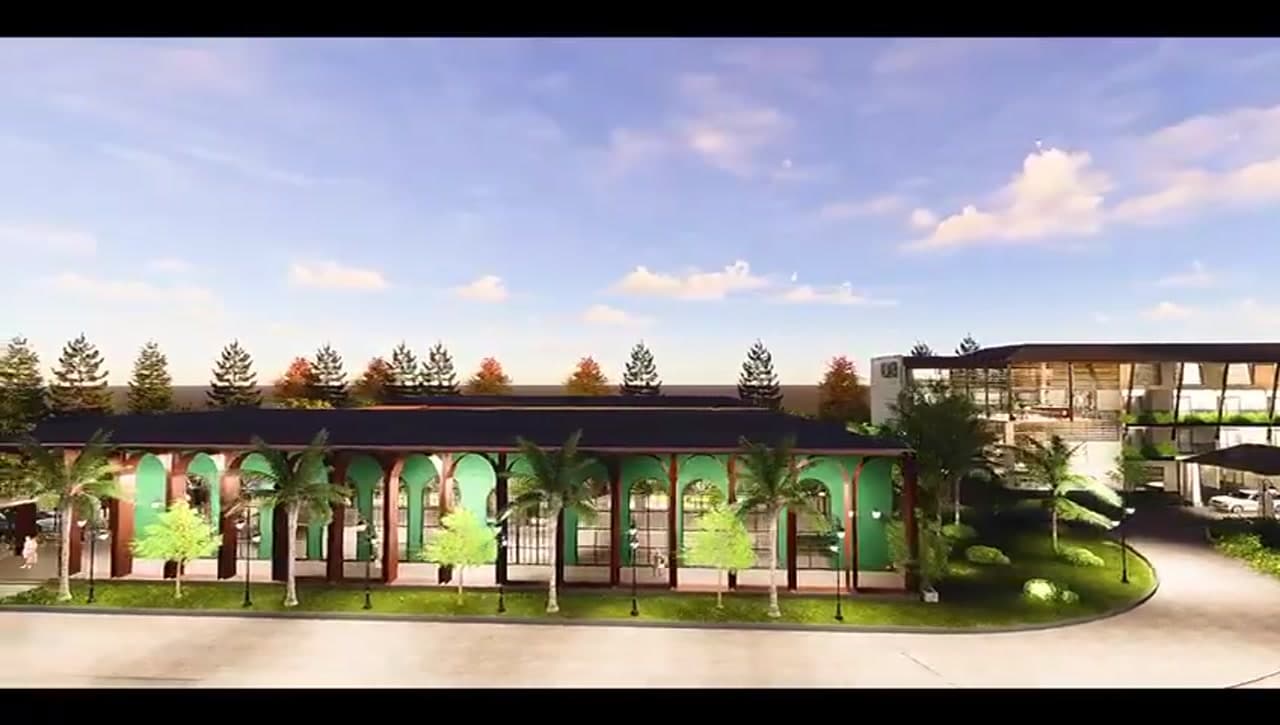
To put this checklist into perspective, consider Le Roma Gardenia — an upcoming 5-star deluxe resort in North Bengaluru:
| Requirement | Le Roma Gardenia |
|---|---|
| Indoor capacity | 9,000 sq ft / 1,200 floating |
| Outdoor capacity | 45,000 sq ft / 3,500 floating |
| Parking | 300+ cars |
| Rooms | 81 rooms / 320 overnight |
| Dining | 2 restaurants + Sky Lounge + Gentlemen's Bar |
| Property area | 6 acres |
| Catering | In-house, multi-cuisine |
| Power backup | Full generator backup |
This is the kind of venue infrastructure that large-scale weddings demand. Anything significantly below these benchmarks for 1,000+ guest events will likely result in compromises that affect the guest experience.
Start Early, Visit Often
For weddings at this scale, begin venue scouting 9–12 months in advance. Visit your shortlisted venues at least twice — once during the day and once in the evening — to understand lighting, ambiance, and traffic flow. Bring your wedding planner to the site visit; their trained eye will spot issues you might miss.
Need a Venue That Handles 1,000+ Guests?
Le Roma Gardenia's 9,000 sq ft banquet hall, 45,000 sq ft of outdoor lawns, and 81 on-site rooms are built for weddings at this scale. Let's discuss your requirements.
Go deeper on any part of this:
- Banquet hall size for 1,000 guests: the sq ft, seating and parking math →
- Guest flow at a 1,000-guest wedding: entry, seating and parking that doesn't jam →
- Banquet hall requirements: the checklist to work through before you sign →
Related reads: